Tuesday, December 18, 2012

The Importance of Grieving after a Tragedy Like Sandy Hook

In Memory of those lost at Sandy Hook 12/14/12
When I lost my mother recently, I learned an important lesson.  I had been taught how to cope, how to survive, how to move on.  But I had never learned how to grieve, how to stay with the pain, how to deal with a pain that takes a long time to go away, and never really goes away completely.  I am always hesitant to talk about or give advice on how to talk to kids about things like this, I am not a parent, a psychologist a scholar, a teacher or any other adult who has a great deal of experience with kids.

I am also aware that many deal with pain and grief in different ways and that there is no right way to grieve, suffer or deal with the loss of someone close to you.  So I will talk about my experiences as a child and an adult witnessing and dealing with loss and pain.  About my coming to the understanding that facing pain, difficult situations and being honest about what happened is important for me in dealing with loss.   About how when something like this happens we want to just keep doing things to keep ahead of the pain, but what we don't know is that the pain will catch up with us eventually. 

I grew up in Italy a country with possibly more petty crime, but much less violent crime than the US.  Not that there was not violent crime, but that crime was mostly as a result of crime families and often was not directed at the general citizenry.  However, that changed with the start of a series of terrorist attacks, some home grown, some from outside the country.

Two attacks hit close to home, one targeted an the school bus belonging to an American ex patriot school, our school (similar but based on a British curriculum), was also put on high alert.  I recall being worried, but feeling somewhat safe, as the adults around us explained what was going on, what was being done and how we should behave to keep us safe.

The second was an attack at an airport that my family went through often on our trips outside the country, I knew that a friend of mine missed being at the airport during the attack by just minutes, and for years after I would look up and see the bullet holes in the top balcony that for some reason were never repaired.  A constant reminder that the world was not as safe a place as one would like.

The main thing about both those incidents was that even kids were given information about what happened, there was conversation between adults, adults and kids and between kids.  It was scary, but we all knew what happened and we all knew what was going on.

A few years later a young boy was abducted, raped and killed.  I knew that boy, not well but I had interacted with him during a riding school camp that we both participated in earlier that year.  I remember him thinking that the way I half held my hands in my pants pockets was cool.  He was a quiet, introverted, cute and sweet kid.

When he was killed, the school kept everything very quiet for a while, rumors spread, some of them not true, but many of them remarkably true.  Somewhere the decision was made to carry on as usual, rather than to mourn.  So we did, school went on, Christmas went on and us kids had no choice but to go on with it.  I remember being deeply disturbed by something so horrific happening to someone I knew, and the odd normalcy of my daily routine at school.   It felt, off and it felt wrong. 

A similar thing happened to a girl that once again I befriended during one of those spring camps, she was in a different class, so once we got back from camp we did not see each other that much.  Kids, came and went in our school often, many kids there had parents stationed in Rome for just a few years.  So when I did not see her for a while, I assumed that she had left with her family.

What I eventually learned through another student, was that she had died, from something that up until then I never thought you could die from, asthma!  I also learned that her father had died just the year before, I can only imagine what the mother must have been going through. By the time I learned of her death it was too late to attend the funeral, too late to tell her mother how much I had liked and respected her daughter.  Too late to really grieve for the loss of my friend.  

I had a similar feeling more recently during the attacks of September 11, I was in college at that time and again the university went on as normal, there was no official acknowledgement from the university of what happened, no mass grieving, just an odd sense of business as usual.  I had that same odd feeling of disconnect, the feeling that something very tragic had happened, but that we did not have time to stop and grieve, that we just kept on, kept moving on.

When my mother died, I finally understood that for me, to stop and grieve is important.  I need to deal with the pain and the sorrow and just be with it for a while.  Everyone is different, and I don't know if knowing more about these events hurts or helps other kids who are not like me.  I am not the expert.  I am just another voice out there, talking about her own experiences.

This will be my last post on Sandy Hook, and I know there are no graphs and data in this post, these are just my thoughts, my personal view on the situation.  Sometimes, feelings and emotions without data are just as important, as long as we don't make laws, policy and societal movments from them, without going back to the data to make sure our emotions are in the right place.


Gun Rights & Mental Health the big red herrings in the conversation about Sandy Hook

I hope that the loss of these beautiful children, the wonderful adults at Sandy Hook and the mother of the shooter is not in vain.  I hope that what turned a quiet, very intelligent young man who apparently was a vegan because he did not want to harm life, into the person able to kill innocent kids, the adults trying to protect them and even his own mother is understood.  I hope that we become wiser and more caring as a result of this tragedy, and I hope that our resolve to protect children extends to those darker, poorer children that are dying as we speak, in less spectacular but just as heartbreaking ways.

Source: daveparker via Wikimedia Commons

I wish I could say that I am optimistic about this, but the tone of the discussions from both liberals and conservatives and all those in between is not giving me much hope.  I think we all want simple answers, so that we can make simple changes and fix this problem.  The reason we have not fixed this is not that we as a nation don't care, that we as a nations don't want action.  The reason we have not fixed this problem is that there is no simple fix. 

By InPhonic Customer Service  via Wikimedia Commons
I have called it a problem, but I have not defined the problem.  In my mind the problem is a very different problem from what I think most in the media and on the internet are discussing.  I suspect that one of the problems we have in talking about these tragedies, is that in some cases we are talking about very different problems, which are really just different aspects of the same problem. 

The problem I am talking about is the loss  of life, children and adults, to violence.  It matters not to me if the loss of life is in the suburbs where violence is not that common, but tends to draw greater emotion from the general public, or if it is in the inner cities where violence is more common, but tends to draw less outrage and emotion outside the communities most affected.

BLACK CHILDREN PLAY OUTSIDE THE IDA B. WELLS HOMES, ONE OF CHICAGO'S OLDEST HOUSING PROJECTS.

Some see the problem as protecting only the 'innocent' children in the suburbs, those whose parents have done no wrong, somehow indicating that the poor parents in the inner cities have done wrong by being poor, and that somehow those children are less 'innocent' I find this rather disturbing.  Others see this as an opportunity to address the problems of the children in the inner cities, by passing gun laws that would perhaps to do more to protect these kids, than any other.

When it comes to gun control, I tend to agree that it would be better to have more, to help protect those children dying out of sight and out of mind, I tend to agree that there are some weapons that really don't need to be sold.

However I have to admit a couple of things.  There are lots of guns in the US, there are lots of people who own guns, very few of them ever kill anyone.  It bothers me that in this discussion they are seen by some as the enemy, their noses being rubbed in this horrific tragedy.  They have more information about the safe use of guns than anyone and should be brought in as partners in this conversation.  As much as I am an advocate for rational gun control, in this case I am not sure even the strictest gun control would have prevented this, it might have mitigated it, if he had not been able to have the particular gun he used, but I am not sure it would have prevented it.

 Now to the other red herring, mental illness and crime.  This conversation has been the most disturbing to me especially as we don't really know if 1) Adam had a mental illness, and 2) if this contributed to this crime.  Something clearly went wrong that day, but can we attribute what happened to any disorder he might have had?  We don't know, and unfortunately we may never know.

A couple of things should be noted,  many people have mental illnesses, most of these people don't go into schools and kill people, most of these people don't harm others period.  Many of these people are more often victims of those who don't have mental illnesses.  To assume that someone with a mental illness is more prone to violence than someone else, is an old prejudice that comes up every time there is one of these horrific crimes.  There are many types of mental illness, many types of personality disorders, and while these tend to create much disruption in the lives of those that have them, and their families, most of these people never harm anyone, and if there is violence, it is often on themselves when they are unable to cope with a world that has a tendency to mistreat them.

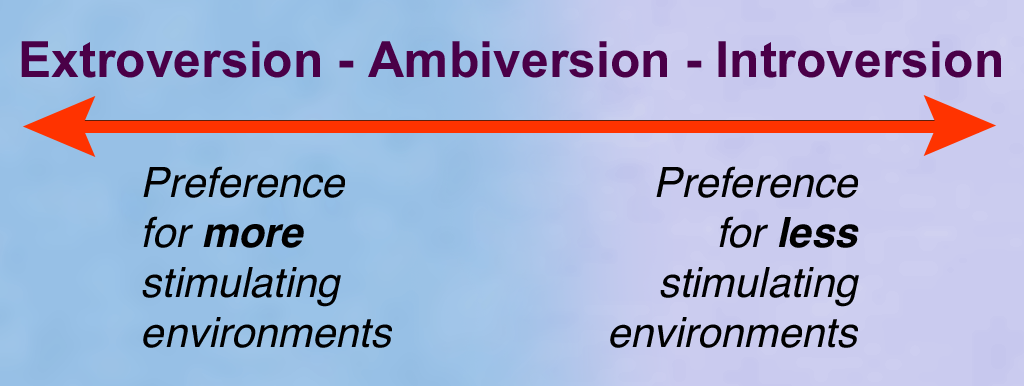
The real difference between extroverts and introverts. Source: By RCraig09 (Own work)  via Wikimedia Commons

It also bothers me that another prejudice, the one against those with introverted tendencies, also tends to flare up when one of these things happens.  There is a desire for those who are suspicious of the introverted, to justify their suspicions by saying "See?  I told you there is something wrong with 'those' people".  The truth is there is no indication that being introverted has any correlation to crime, where it has been looked at, an inverse correlation has been found, in the sense that most people arrested for crimes tend to be high on the neurotic and extroverted scales.

Think about it this way, if it were shown that this young man was an extroverted, charismatic  guy like Ted Bundy (an most psychopaths) for example, would we be saying that it was this extroversion that was somehow responsible for his crime?  That his having so many people to talk to, and being so at ease, was the reason that he went nuts?  Of course not, so why do we do that with introversion?  Many of these people are also found to be highly intelligent, yet we don't indicate that somehow their intelligence is what caused them to do this, why not?

I suspect that in these situations we want to look at the person doing this crime as the 'other' someone unlike us, so that we can draft laws that can separate 'those' people from us so that 'we' can be safe.  I think this happens when we look at mental illness in the context of these crimes when most people who commit gun violence are not mentally ill, the focus on the 'Loner', when more extraverts commit crimes in general, and on race and sometimes gender in crime.

I don't think we can solve the problem of gun violence, and the larger issue of violence, until we understand that the people who commit these crimes are not 'other' they are us.  They are us who have been bullied and could not handle it, they are us who have been pushed over the edge and could not handle it, they are us who act on our deepest darkest prejudices, they are us who act on their anger.   Thus no law or societal action that focuses on 'others' will ever protect us as they are not 'other', they are us.  Until we have laws that protect all of us equally, help all of us equally and address all of us no matter how different or similar we seem, we will never solve this problem.

One final thought, the other night I saw a commercial for an upcomming film, filled with many shootings, guns and quite a bit of violence.  I can't help thinking that while it is OK to have some movies with this kind of action, perhaps if fewer of our movie 'heros' were depicted like this:

Pierce Brosnan (Madame Tussauds)

By Jeremy from Leuven, Belgium (Ireland - London Trip) [CC-BY-2.0 (http://creativecommons.org/licenses/by/2.0) or Public domain], via Wikimedia Commons
 And more like this:

Ghandi 60 years walking to meeting

By Vdkdaan (Own work) [CC-BY-SA-3.0 (http://creativecommons.org/licenses/by-sa/3.0)], via Wikimedia Commons

 Or this:

Mother Teresa

By Evert Odekerken [CC-BY-2.5 (http://creativecommons.org/licenses/by/2.5)], via Wikimedia Commons
The latter two might not be as sexy, I agree, but they are both examples of people who are real heroes, bringing life to others as well as hope, not with violence, but with peace.  They are not large people, nor are they very strong people, but they were able to affect the lives of many, have their voices heard and be a force for good in the world.

I am not saying that we have to force kids to go see movies about Mother Teresa, or Ghandi, although I think it would be great if they did. I am saying that perhaps the heroes of other movies could use more love, talking and kindness, than guns, and violence when resolving problems.  Rather than often having these qualities mocked in those movies, in our schools and yes, in this discussion about quiet people.

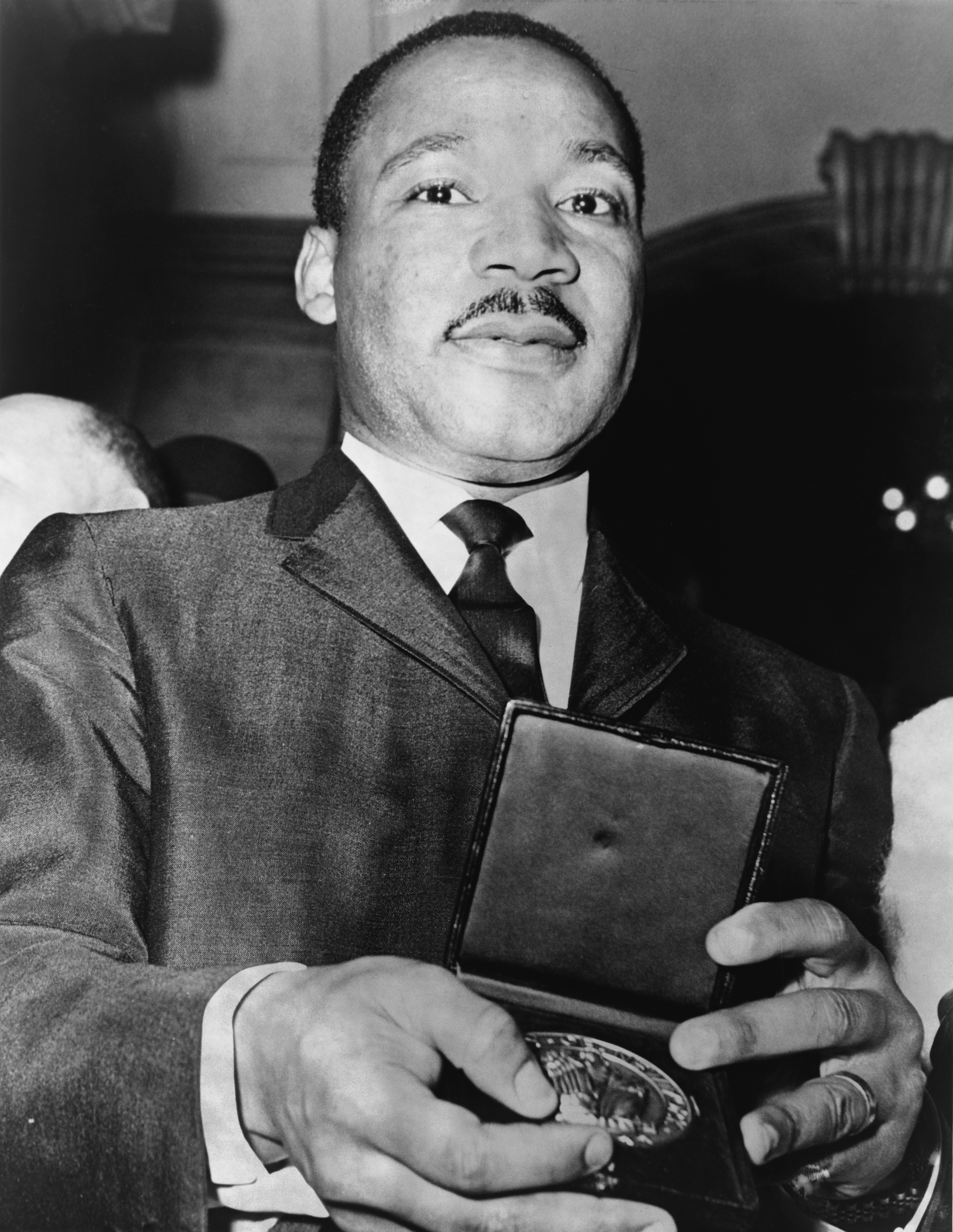
Martin Luther King Jr with medallion By

Phil Stanziola, NYWT&S staff photographer [Public domain], via Wikimedia Commons
My Final thoughts are that we can reduce violence, we can honor the memories of the people who died at Sandy Hook, and we can do it without taking away guns from all Americans, and without taking away the rights of with mental health issues.  We are already doing it, it won't be simple, it won't be pretty, but it can be done.  The question is are we willing to look at 'all' the children in the US as 'all' our kids?  Are we willing to have an honest discussion about what kind of society we all want to live in?   I sure hope so.
                                 
Food for thought:  Both Ghandi and Martin Luther King Jr. were killed by firearms.

Monday, December 17, 2012

What do hate crime statistics really tell us?

I wanted to create a blog about hate crime statistics, I went through the data on the FBI site (www.fbi.gov), and was getting ready to download and analyze the data when I started looking at the data by location.  At first I saw nothing wrong, but then I noticed something rather odd.  States like Alabama (total hate crimes reported 96) had lower hate crime rates than states like Connecticut (164), or Massachusetts (424).  Some states with historical racially explosive histories, had remarkably low levels of hate crimes while many liberal states had very high levels of hate crimes.


The problem, I think, with the data is that it is obtained by voluntary participation of police departments, thus if a particular police department does not take hate crime seriously, or does not investigate it, then in that area, there will be no hate crimes.  Of course this data could be true, but I have to admit I am having a hard time believing it. The columns in blue are the more liberal leaning states, while the colors in red are the more conservative leaning states.

There are other sources of hate crime statistics this one relies on a survey about victimization,
Data Collection: National Crime Victimization Survey (NCVS)
Status: Active
Frequency: Ongoing from 1973
Latest data available: 2011
NCVS is the Nation's primary source of information on criminal victimization. Each year, data are obtained from a nationally representative sample of about 40,000 households comprising nearly 75,000 persons on the frequency, characteristics and consequences of criminal victimization in the United States. Each household is interviewed twice during the year. The survey enables BJS to estimate the likelihood of victimization by rape, sexual assault, robbery, assault, theft, household burglary, and motor vehicle theft for the population as a whole as well as for segments of the population such as women, the elderly, members of various racial groups, city dwellers, or other groups. The NCVS provides the largest national forum for victims to describe the impact of crime and characteristics of violent offenders.

 The problem with this second set of data is that while it gets around the under reporting of hate crimes by the Police, a survey that states that the majority of hate crimes are commited by women (69%) and blacks (89%), is a little hard to find credible (USDOJ.gov).
                           Race of offenders
                      committing hate crimes
                   White       Black        Other
Race              30.5%      89.1%      59.3%
                          Gender of offenders
                         committing hate crimes
Motivation  Male        Female        Both
Race            55.5%       68.8%        35.9*

I am not saying that this data is wrong, I just don't believe it.  For the second set of data, the majority of people interviewed would have been white, with only 12% being black.  When discussing hate crime, it would make more sense to have a 50 - 50 split.  BTW the FBI shows a completely different picture (of course not a complete picture).
(FBI Offender data, FBI Victim data)
Among the single-bias hate crime incidents in 2010, there were 3,949 victims of racially motivated hate crime.  A closer examination of these victim data showed that:
  • 70.0 percent were victims of an offender’s anti-black bias.
  • 17.7 percent were victims of an anti-white bias.
  • 5.1 percent were victims of an anti-Asian/Pacific Islander bias.
  • 1.2 percent were victims of an anti-American Indian/Alaskan Native bias.
  • 6.0 percent were victims of a bias against a group of individuals in which more than one race was represented (anti-multiple races, group).
In 2010, the races of the 6,008 known hate crime offenders were as follows:
  • 58.6 percent were white.
  • 18.4 percent were black.
  • 8.9 percent were groups made up of individuals of various races (multiple races, group).
  • 1.1 percent were Asian/Pacific Islander. 
  • 1.0 percent were American Indian/Alaskan Native.
  • 12.0 percent were of unknown race.

So for me all this data is meaningless there are clearly problems with both methods of obtaining data, and it also shows the truth about the old statistical saying: rubbish in, rubbish out.   Sometimes you have to take a good look at the data before blindly following it to the incorrect solutions.

Firearms and Murder what does the Data Tell Us?

In the wake of the horrific shooting that occurred in Sandy Hook CT, the argument over gun control has heated up again.  As always the arguments are high on emotion and short on data.  The data when presented is used to promote one side or another and can often be contradictory.  Those on the side of limiting guns say that states with stricter gun laws have fewer gun related homicides and those on the side of keeping them say that if guns were not present people would use other weapons to kill people.

According to the data both sides are right, and both sides are wrong, the story is interesting but much more complicated than either side would like to present. When you look at murders, what is the most used weapon? Based on the data from (source for firearm data: www.fbi.gov), the answer is simple, firearms.

However the answer becomes less simple if you take a closer look at the data.  If you look at state by state data there is not such a clean cut relationship between firearms and Murder.

-->
State Total Murders % Firearms Other weapons
Hawaii 7 14.29 85.71
Vermont 8 50.00 50.00
North Dakota 12 50.00 50.00
Rhode Island 14 35.71 64.29
South Dakota 15 33.33 66.67
New Hampshire 16 37.50 62.50
Montana 18 38.89 61.11
Maine 25 48.00 52.00
Alaska 29 55.17 44.83
Idaho 32 53.13 46.88
Delaware 41 68.29 31.71
Iowa 44 43.18 56.82
Utah 51 50.98 49.02
Nebraska 65 64.62 35.38
Minnesota 70 61.43 38.57
West Virginia 74 58.11 41.89
Oregon 77 51.95 48.05
District of Columbia 108 71.30 28.70
Kansas 110 66.36 33.64
New Mexico 121 49.59 50.41
Connecticut 128 73.44 26.56
Nevada 129 58.14 41.86
Wisconsin 135 59.26 40.74
Colorado 147 49.66 50.34
Kentucky 150 66.67 33.33
Arkansas 153 71.90 28.10
Washington 161 49.07 50.93
Massachusetts 183 66.67 33.33
Mississippi 187 73.80 26.20
Oklahoma 204 64.22 35.78
Indiana 284 64.44 35.56
Virginia 303 68.65 31.35
South Carolina 319 69.91 30.09
Arizona 339 65.49 34.51
Missouri 364 75.82 24.18
Tennessee 373 65.42 34.58
New Jersey 379 70.98 29.02
Maryland 398 68.34 31.66
Illinois3 452 83.41 16.59
Louisiana 485 82.89 17.11
Ohio 488 70.49 29.51
North Carolina 489 68.51 31.49
Georgia 522 70.88 29.12
Michigan 613 73.41 26.59
Pennsylvania 636 73.90 26.10
New York 774 57.49 42.51
Texas 1089 64.19 35.81
California 1790 68.16 31.84

 In some states the percentage of firearms involved in murder is high, in others it is not, however if you sort the data by number of murders, you can see that when the numbers of murders in a state is high, then most of the murders involve firearms, this is especially true when the number of murders is above 200.  When the numbers of murders are below 100, then the relationship between murders and guns is much lower.

I also looked at the relationship between gun laws (using data from The Brady Campaign), to see if there was a correlation between gun laws, number of murders and the use of firearms and murder.

-->
State points Total Murders % Firearms
Hawaii 50 7 14.29
Vermont 6 8 50.00
North Dakota 2 12 50.00
Rhode Island 44 14 35.71
South Dakota 4 15 33.33
New Hampshire 6 16 37.50
Montana 2 18 38.89
Maine 7 25 48.00
Alaska 0 29 55.17
Idaho 2 32 53.13
Delaware 13 41 68.29
Iowa 7 44 43.18
Utah 0 51 50.98
Nebraska 5 65 64.62
Minnesota 14 70 61.43
West Virginia 4 74 58.11
Oregon 15 77 51.95
District of Columbia 108 71.30
Kansas 4 110 66.36
New Mexico 4 121 49.59
Connecticut 58 128 73.44
Nevada 5 129 58.14
Wisconsin 3 135 59.26
Colorado 15 147 49.66
Kentucky 2 150 66.67
Arkansas 4 153 71.90
Washington 15 161 49.07
Massachusetts 65 183 66.67
Mississippi 4 187 73.80
Oklahoma 2 204 64.22
Indiana 4 284 64.44
Virginia 12 303 68.65
South Carolina 8 319 69.91
Arizona 0 339 65.49
Missouri 4 364 75.82
Tennessee 8 373 65.42
New Jersey 72 379 70.98
Maryland 45 398 68.34
Illinois3 35 452 83.41
Louisiana 2 485 82.89
Ohio 7 488 70.49
North Carolina 16 489 68.51
Georgia 8 522 70.88
Michigan 25 613 73.41
Pennsylvania 26 636 73.90
New York 62 774 57.49
Texas 4 1089 64.19
California 81 1790 68.16

The numbers in the points column are points given to each state according to how comprehensive their gun laws are, the higher the number the stronger the gun restrictions.  Considering that the two states that have one of the best and worst records on gun control have the highest number of murders and both have high levels of involvement of firearms in murders, and many states with very lax gun laws also have some of the lowest murder rates, it is hard to see any kind of correlation between gun laws and murder rates, or rates of firearms used in murders base on this data.

  A word of caution for those gun enthusiasts that would like to run with this data, crime rates are often highly correlated with population rates, so a better way to tackle this question would be to look at each state individually and see data on guns and violence before and after gun laws are adopted.  Also correlation does not equal causation, so looking at New Jersey for example, New Jersey has one of the best scores on gun control, relatively high murder rates, and a high proportion of those murders involved guns.  The question is, is this despite the good gun laws? Or does this data simply reflect that those gun laws were put in place to tackle a serious problem with gun violence?

The one thing that does seem clear however, is that the more murders there are in a state, the higher the likelyhood that a gun is involved.  The three charts below show this for all the states and then for each state individually, broken down into states with less than 100 murders, states with between 100 and 200 murders and then states with greater than 200 murders.  In the graphs broken down by state the blue columns represent total murders, the red ones, the murders where firearms were involved, and the green one where something other than a firearm was involved.


The numbers were not what I expected, but I thought they were interesting.  In the following blog, we have a look at the crime rates of the US compared to other industrialized countries (America is a violent country).  Again for me what this data tells us it is not that clear cut, America is a much larger country than many other industrialized countries, does not have as substantial social safety nets, health care and ways of dealing with poverty as many other industrialized countries.  So in my mind relative crime rates need to be treated with caution.  But the data is interesting.

BlogSurfer

About Me

I am always fascinated by the disconnect between what the world is telling us and what we choose to believe. I hope this blog causes you to think about what you are being told by those around you, by the media and politicians. I don't expect you to agree with me and I graph things that are of interest to me, the point is not to bring you to my point of view, but to show you that sometimes the world is not the way we think it is.